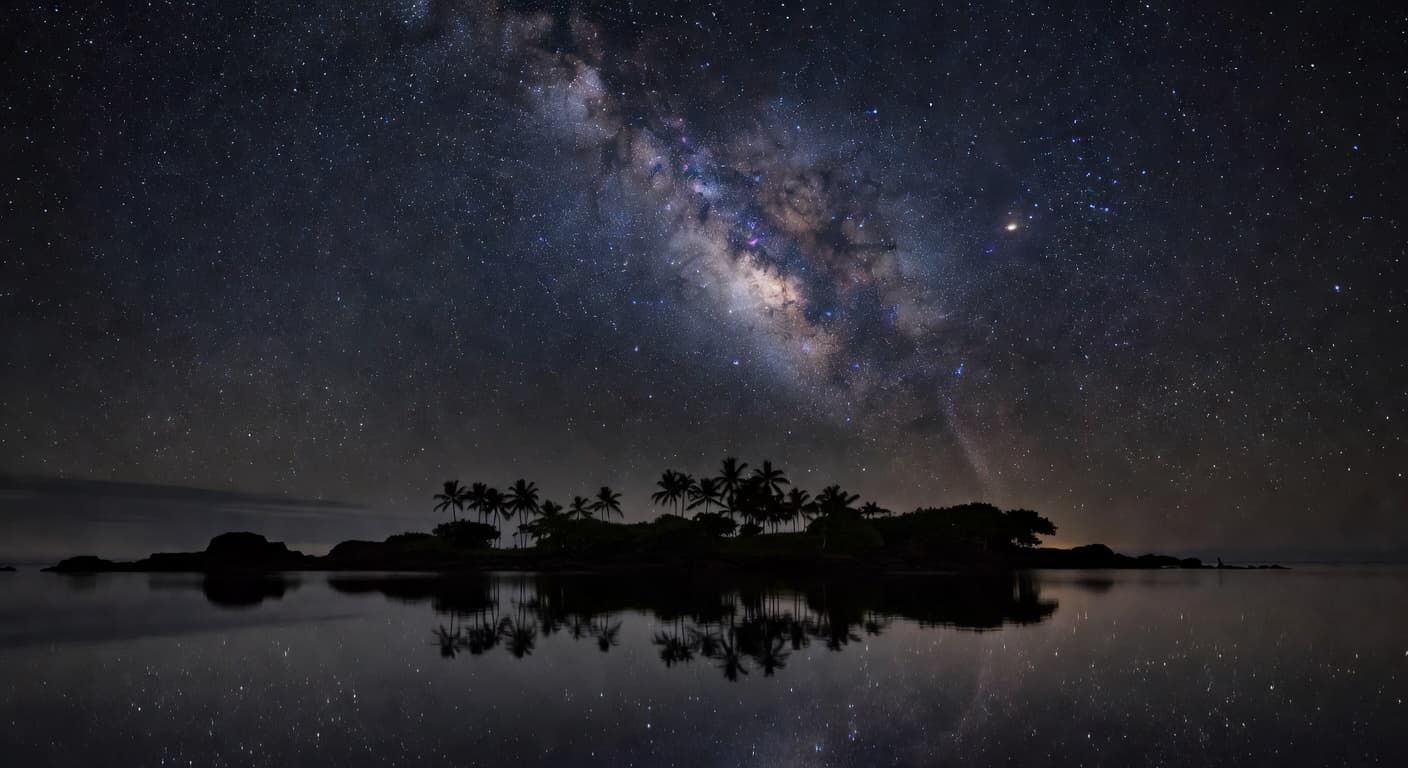
When the sun sets over the Caribbean and the last cruise ships disappear over the horizon, a different kind of magic takes over Grenada. Far from the light pollution that plagues most of the developed world, the Spice Isle offers some of the clearest, darkest night skies in the Caribbean. On a clear, moonless night, the Milky Way arches overhead in a blazing river of light — a sight that stops even seasoned travellers in their tracks.
Why Grenada's Skies Are Special
Several factors combine to make Grenada an exceptional stargazing destination. First, the island sits at 12 degrees north latitude, giving observers access to constellations visible from both hemispheres — you can see Orion, the Southern Cross, Centaurus, and Scorpius at different times of the year. Second, Grenada's population of just 125,000 means relatively low light pollution, especially once you move away from the southwestern tourist corridor. Third, the island's mountainous interior provides elevated vantage points above any coastal haze. And fourth, the tropical location means warm evenings year-round — no need for heavy winter gear to enjoy a night under the stars.
Constellations Visible from Grenada
Grenada's near-equatorial position means you can observe an unusually wide range of celestial objects throughout the year. From December through March, Orion dominates the evening sky, with Sirius — the brightest star visible from Earth — blazing nearby. The Pleiades star cluster is visible to the naked eye, appearing as a fuzzy patch of light that reveals itself as a group of brilliant blue stars through a telescope. From April through August, the summer constellations take over: Scorpius with its red heart Antares, the teapot shape of Sagittarius pointing toward the galactic centre, and the Summer Triangle formed by Vega, Deneb, and Altair. In the darkest skies, the zodiacal light — a faint, ghostly glow caused by sunlight reflecting off interplanetary dust — becomes visible before dawn, a phenomenon that most people in developed countries will never see.
Best Stargazing Spots
These locations offer the darkest skies on the island:
- Levera Beach (northeast) — minimal light pollution, wide open horizon over the Atlantic
- Grand Etang area (central highlands) — elevated above coastal haze, surrounded by dark forest
- Bathway Beach (northeast) — remote location with virtually zero artificial light
- La Sagesse (southeast) — secluded bay with dark skies and calm conditions
- Carriacou — Grenada's sister island has even less light pollution and wider horizons
Noctourism: The Growing Trend
Noctourism — tourism centred around nighttime experiences — is one of the fastest-growing segments in the travel industry, and Grenada is perfectly positioned to lead the trend in the Caribbean. As more travellers seek meaningful, off-the-beaten-path experiences, the appeal of a guided stargazing session under pristine dark skies has become a major draw. Unlike traditional nightlife tourism, noctourism offers a contemplative, educational, and deeply memorable experience that appeals to couples, families, and solo travellers alike. Grenada's warm nights, stable weather patterns, and low light pollution make it one of the best stargazing destinations in the entire region.
What to Expect on a Stargazing Tour
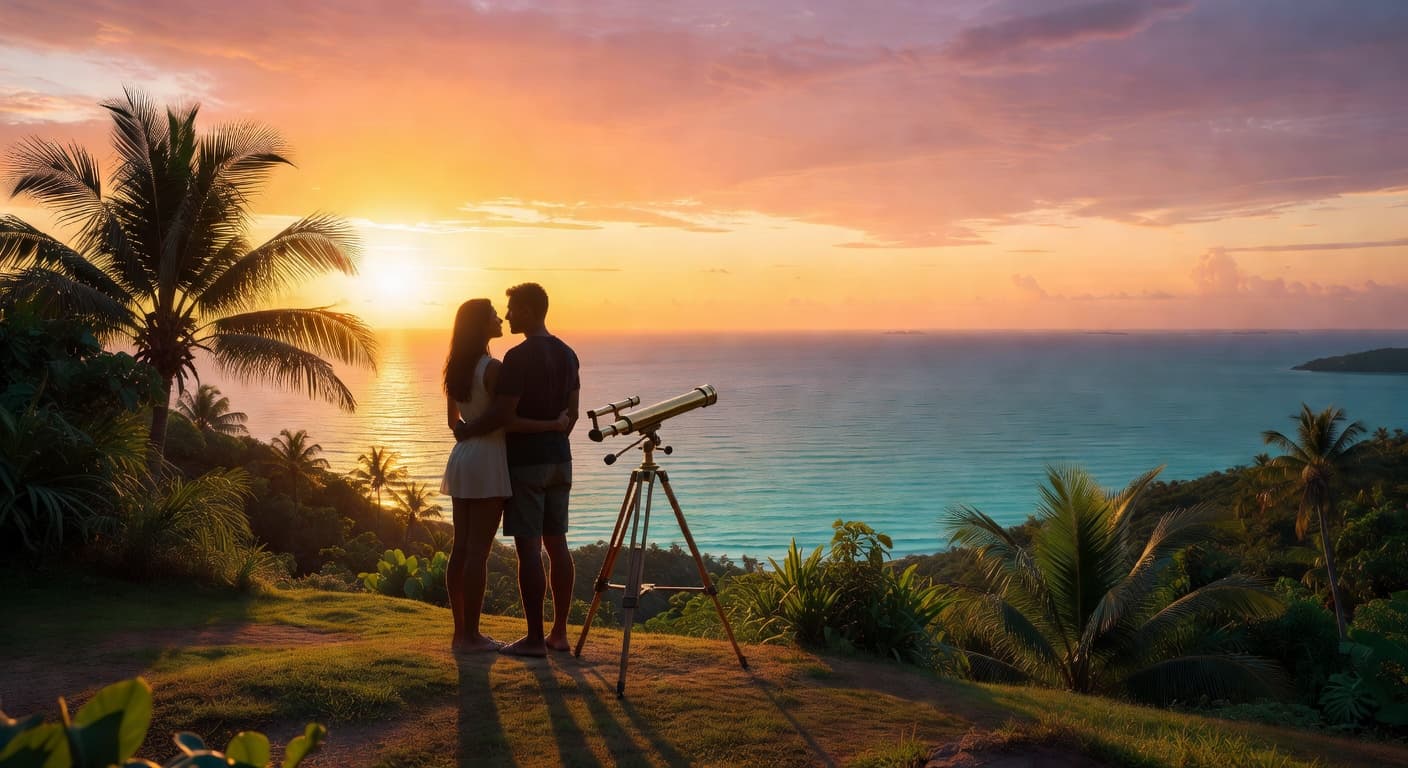
A guided stargazing experience in Grenada typically begins with a scenic drive to a carefully selected dark-sky location. As your eyes adjust to the darkness — a process that takes about 20 minutes for full dark adaptation — your guide begins pointing out constellations, planets, and celestial features visible to the naked eye. Then the telescope comes out, revealing details invisible without optical aid: the rings of Saturn, the cloud bands on Jupiter, the craters on the Moon, and the glittering jewels of star clusters and nebulae. Throughout the session, your guide weaves together astronomy, mythology, and local Grenadian folklore about the stars. Hot beverages are provided to keep you comfortable, and the entire experience lasts approximately two to three hours.
Tips for the Best Stargazing Experience
Maximize your night sky adventure:
- Choose a new moon night — the Milky Way is most visible when the moon is absent
- Allow 20 minutes for your eyes to fully adapt to the dark — avoid looking at your phone
- Bring a light jacket — mountain locations can be cooler than the coast at night
- Download a star chart app (like Stellarium) before your trip, but use it in red-light mode only
- Arrive early in your trip so you can reschedule if clouds interfere
- Consider combining with a sunset tour — our Sunset to Stars experience covers both
Insider Tip
Our Stars Over Grenada tour includes a professional telescope, constellation identification, and hot beverages under the Milky Way. For the ultimate evening, the Sunset to Stars experience adds a Caribbean sunset viewpoint and gourmet dinner — from golden hour to the galaxy in a single night.